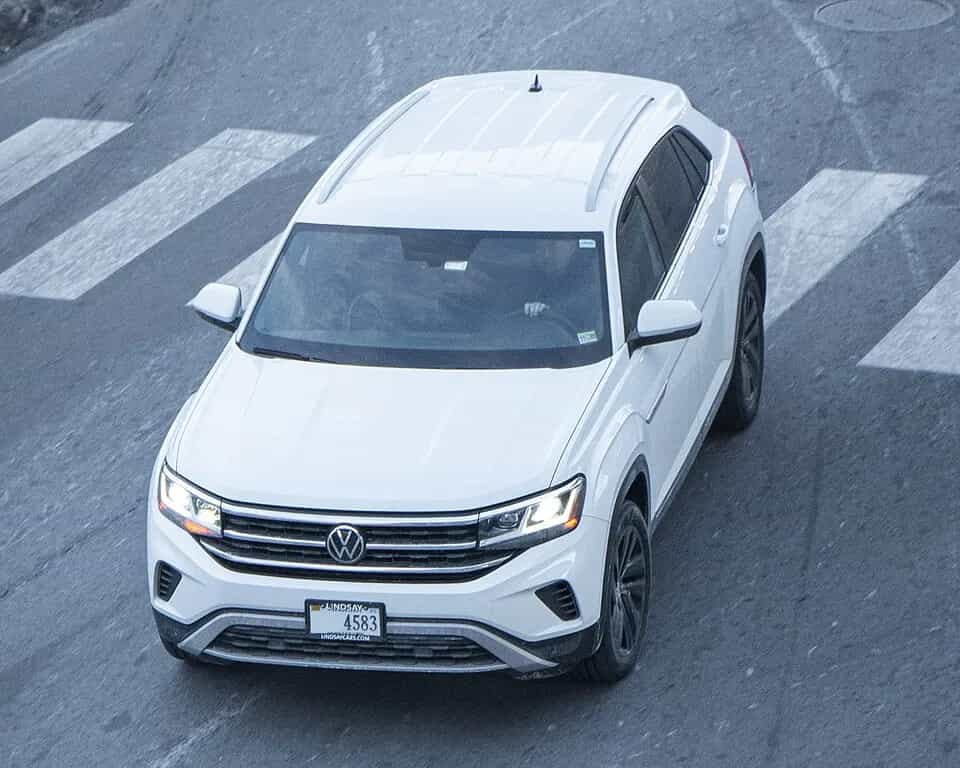
Volkswagen Atlas Cross Sport
Importing a used Volkswagen Atlas Cross Sport from the USA
The Atlas Cross Sport is one of those curiosities that make US imports interesting: a Volkswagen designed primarily for North America and never sold new in Germany. It is the coupe-roofed, five-seat sibling of the seven-seat Atlas, built in Chattanooga, Tennessee. For a German buyer who wants a large, comfortable VW SUV that no one else in the school car park has, importing a used Atlas Cross Sport from the USA is a genuinely intriguing option, and its Tennessee origin has real bearing on the customs side.

Generations at a glance
Volkswagen introduced the Atlas Cross Sport for the 2020 model year, carving a sportier two-row body out of the existing Atlas platform (VW's MQB architecture in long-wheelbase form). The first years, 2020 to 2023, share the original front-end styling and the pre-facelift interior with a more conventional dashboard. For 2024, VW gave the whole Atlas family a substantial refresh: new front and rear styling, a redesigned dashboard with a large central touchscreen and digital instruments, and the switch to a single turbocharged four-cylinder engine. So a used Cross Sport falls into two clear camps, the V6 pre-facelift cars and the four-cylinder facelifted cars.
Powertrain lineup
Early Cross Sports offered two engines in the US. The base unit is VW's EA888 2.0-litre turbocharged four-cylinder, producing around 235 hp. The optional engine, and the one many US buyers chose, is the 3.6-litre VR6 narrow-angle six making roughly 276 hp. Both drive through an eight-speed torque-converter automatic. Front-wheel drive is standard; VW's 4Motion all-wheel drive is optional and common on higher trims. The VR6 is smooth and characterful but thirsty; the 2.0T is the more efficient everyday choice. From 2024 the VR6 was dropped in favour of a higher-output 2.0T rated near 269 hp.
Trims in the US market
The Cross Sport is a five-seat, five-door SUV with a sloping coupe-style roofline that distinguishes it from the boxier seven-seat Atlas. US trims run through S, SE, SE with Technology, SEL, SEL Premium and the sporty R-Line appearance package. R-Line cars add unique bumpers, larger wheels and trim details. SEL Premium brings the fullest equipment: ventilated seats, premium audio, panoramic roof and the most driver-assist features. Because it drops the third row, the Cross Sport gains a notably large boot and generous rear-seat space for two.
The used market stateside
Atlas Cross Sport volumes in the US are healthy, so used examples from 2020 onward are readily available, many as lease returns or family cars. Typical mileage tracks ordinary suburban use. The pre-facelift VR6 SEL and SEL Premium cars are popular imports because of their equipment and smooth six-cylinder. Condition is generally good, though as family SUVs they can show interior wear and the usual parking scuffs, so inspect carefully.
Who should import one
The Atlas Cross Sport suits a buyer who wants a big, relaxed, comfortable SUV for two adults and occasional rear passengers, with a large boot and easygoing manners, in a package that is rare in Europe. Families who genuinely need seven seats should look at the standard Atlas instead. Anyone chasing low fuel bills should favour the 2.0T over the VR6. Because it is US-built, it is also one of the more customs-friendly VW imports when the VIN confirms Tennessee assembly.
Key specifications
| Body style | 5-door, 5-seat mid-size SUV coupe |
| Platform | VW MQB (long wheelbase) |
| Base engine | 2.0 L turbo I4 (EA888), approx. 235 hp |
| Optional engine (to 2023) | 3.6 L VR6, approx. 276 hp |
| 2024+ engine | 2.0 L turbo I4, approx. 269 hp |
| Transmission | 8-speed automatic |
| Drive | FWD or 4Motion AWD |
| Length | Approx. 5,048 mm |
| Wheelbase | Approx. 2,979 mm |
| Kerb weight | Approx. 1,900-2,050 kg |
| Boot (seats up) | Approx. 583 L |
| Boot (seats folded) | Approx. 2,203 L |
| Towing (VR6, equipped) | Up to approx. 2,268 kg |
| Seating | 5 |
| Fuel | Petrol |
| Origin | Built in Chattanooga, Tennessee (USA) |
How reliable is it?
The Atlas Cross Sport is generally solid, but each engine has its watch points. The EA888 2.0T is well known for carbon build-up on the intake valves over time and for the occasional water-pump or PCV issue, so service history matters. The VR6 is durable but heavy on fuel and can develop coolant leaks and worn timing components at higher mileage. Across the range, owners report infotainment freezes on early software, occasional electrical gremlins, and start-stop system niggles. The eight-speed automatic is robust if serviced. When researching Atlas Cross Sport reliability and common problems, prioritise a documented service history, evidence of oil changes on the 2.0T, and cooling-system health on the VR6.
What US models do differently
US cars run US-spec lighting without a rear fog lamp, amber side markers, and headlight beam patterns that need adapting for German approval. The infotainment is set to US units, US radio tuning and North American navigation. Some driver-assist features are calibrated for US roads. Equipment badging and warning labels are in English, and the tyre pressure monitoring reads in psi. None of this is a barrier, but each item is part of the TUEV process.
Seven steps to your import
Begin with selecting the right car and trim. Run a VIN and origin check; on the Cross Sport this usually confirms Tennessee assembly, which is decisive for the customs rate. Pay through secure escrow, then book ocean freight to a German port. Clear customs on arrival, present the car for TUEV individual approval, carry out any required modifications, and register it locally.
Customs, taxes and costs explained
Key point: duty depends on the plant of build; only a VIN check secures the 0% rate. Import VAT of 19% applies regardless.
USCar Trader works as an independent broker and adds no margin to the car. Two separate charges apply on import. The customs duty depends on the vehicle's provable origin: for a car with documented US origin, Regulations (EU) 2026/1455 and 2026/1461 permit a 0% rate from 1 July 2026, subject to direct transport and valid VIN/plant proof, and in force until 31 December 2029. Because the Atlas Cross Sport is built in Chattanooga, a US-origin VIN will often support the 0% rate, though it must always be proven, never assumed. Separately, the 19% German import VAT (Einfuhrumsatzsteuer) applies on the customs value in every case. We never describe an import as duty-free or guaranteed.
German TÜV and registration
Expect to adapt the headlights, add a rear fog lamp, and confirm the speedometer and odometer display metric units. Any US-specific reflectors are checked. Once TUEV issues the individual approval, you register the car and receive German plates.
The buyer checklist
Confirm the VIN and Chattanooga build. Order a Carfax or AutoCheck report for accidents and title status. Verify oil-change history on the 2.0T or cooling-system service on the VR6. Inspect the panoramic roof drains and interior wear. Check the title is clean, not salvage or flood. Test the 4Motion system and all electronics.
Questions and answers
Is the Atlas Cross Sport built in the USA?
Yes, it is assembled in Chattanooga, Tennessee, which can support a 0% duty rate when the VIN proves US origin.
Which engine is better for import?
The 2.0T is more economical and common; the VR6 is smoother but thirstier. Both use the eight-speed automatic.
Does the 19% import VAT still apply?
Yes. The German import VAT of 19% applies on every import, independent of the duty rate.
Is the Atlas Cross Sport reliable?
Generally yes, with the main concerns being carbon build-up on the 2.0T and cooling maintenance on the VR6.
Can I get seven seats?
No. The Cross Sport is a five-seat body; for seven seats you need the standard Atlas.
How big is the boot?
Around 583 litres with the seats up and over 2,200 litres folded, which is generous for the class.
Was it ever sold new in Germany?
No, which is precisely why importing a used one from the USA is the way to own one here.
How long does the import take?
Usually several weeks from purchase to registration, mostly ocean freight and the TUEV appointment.
Explore more with Volkswagen in the Carhub, compare the Volkswagen Taos and the Honda Passport, or browse the current Atlas Cross Sport listings.